If you need an Indian IP address from Pakistan, Surfshark is the paid VPN we recommend first, with 80% off for our users — and this guide compares every verified paid option, because the honest answer about India servers changed in 2022 and most buying guides have not caught up.
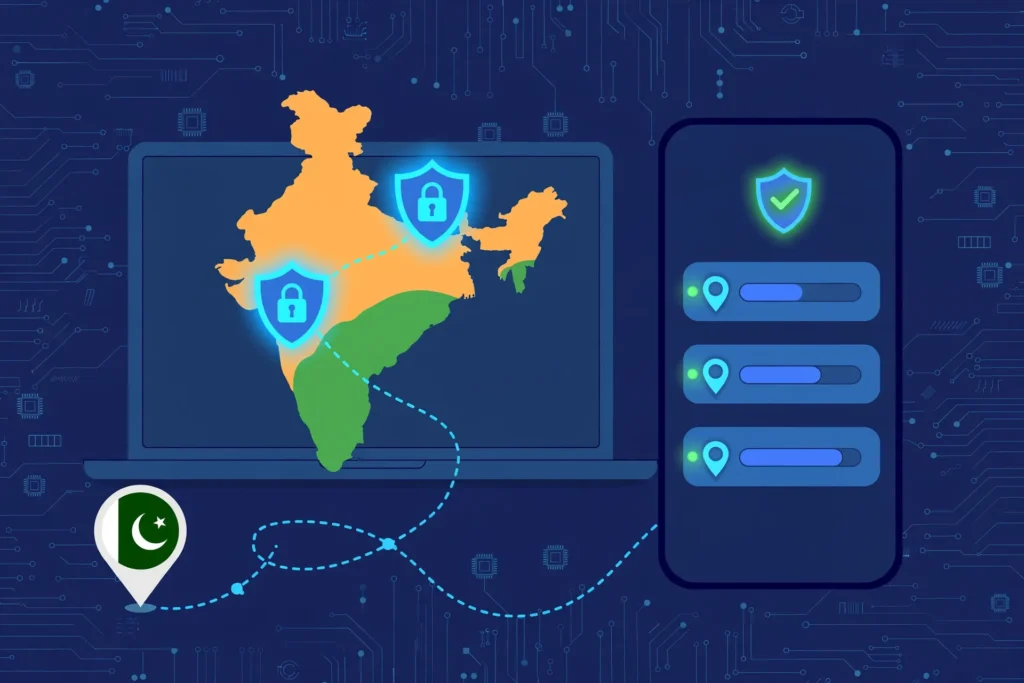
The short answer is that no major no-logs VPN runs physical servers inside India any more. Every provider in this guide gives you an Indian IP address from a virtual location: the server hardware sits in Singapore, the United Kingdom or the Netherlands, while the IP address it assigns you is registered in India.
That distinction matters for two reasons. First, it protects your privacy, because a server inside India would fall under the data-retention rules explained below. Second, it changes what you should expect: a virtual location can be slower than a nearby physical server, and some strict services can tell the difference, so you should test before you commit to a long plan.
This guide verifies each provider against its own official pages and current independent testing from November 2026. Prices are converted to Pakistani rupees at about Rs 277 per US dollar, the rate on 20 November 2026, and every price is labelled with its plan length, because the monthly figure on a VPN homepage is almost never the price you actually pay each month.
One honest limit applies to the whole article. No original speed measurements are published here, and no speed numbers, ping values or test results from Pakistan were measured for this post. Where a speed figure appears, it is attributed to the publication that measured it, and the testing method section tells you how to run your own checks.
The Short Answer: Best Paid VPNs With India Servers for Pakistan
For most readers in Pakistan, Surfshark is the best paid India VPN: two virtual India locations in Delhi and Mumbai, 50 Indian servers on its official page, unlimited devices on one subscription, and about US$2.49 a month on its 24-month plan, roughly Rs 690 at the 20 November 2026 exchange rate.
NordVPN is the best overall alternative, with a Mumbai location hosted in Singapore, 10 devices, and about US$3.49 a month on its two-year plan, roughly Rs 967. ExpressVPN is the premium choice, with two India locations, India via Singapore and India via UK, at about US$2.99 a month on its 28-month Basic plan, roughly Rs 828.
Proton VPN is the privacy-first pick, offering India through Smart Routing servers in Singapore at about US$3 a month on its two-year Plus plan, roughly Rs 828. CyberGhost is the cheapest long plan in this guide at about US$1.99 a month for 28 months, roughly Rs 551, with 60 virtual India servers and the longest refund window at 45 days.
Windscribe is the outlier. It is the only provider in this guide reported to run a physical server in Mumbai, and it costs about US$5.75 a month on its yearly plan, roughly Rs 1,593. That physical-server claim comes from third-party comparisons rather than Windscribe’s own published server list, so this article flags it as unconfirmed and tells you how to check it yourself.
| Provider | India Location | Hosted In | Devices | Longest-Plan Price |
|---|---|---|---|---|
| Surfshark | Delhi and Mumbai (virtual) | Singapore, Netherlands, UK | Unlimited | About US$2.49/mo (24 months) |
| NordVPN | Mumbai (virtual) | Singapore | 10 | About US$3.49/mo (2 years) |
| ExpressVPN | India via Singapore, India via UK | Singapore, UK | 10 (Basic) | About US$2.99/mo (28 months) |
| Proton VPN | India via Smart Routing | Singapore | 10 (Plus) | About US$2.99/mo (2 years) |
| CyberGhost | Mumbai, 60 servers (virtual) | Singapore | 7 | About US$1.99/mo (28 months) |
| Windscribe | Mumbai (reported physical) | India (reported) | Unlimited | About US$5.75/mo (1 year) |
Why India Servers Are Virtual Now: The CERT-In Rules
In April 2022, India’s Computer Emergency Response Team, CERT-In, ordered VPN providers with servers in the country to keep customer names, contact details, IP addresses and reasons for using the service for five years. The order applied to any provider with physical infrastructure inside India, and it clashed directly with the no-logs promises those providers sell.
The response was fast and near-universal. ExpressVPN removed its physical India servers in June 2022, Surfshark shut its India servers down the same month, and NordVPN and Proton VPN followed, moving their Indian IP addresses to servers abroad. None of them has brought physical servers back, and there is no sign that any of them plans to.
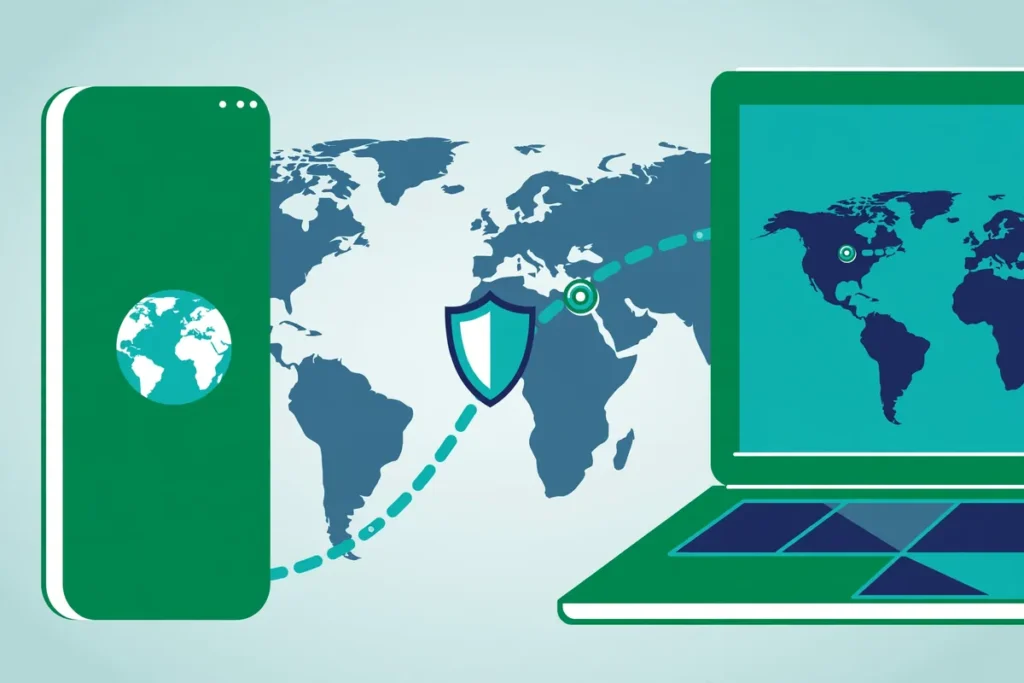
The replacement is the virtual location. The provider rents or runs a server in a nearby country, usually Singapore, and registers an Indian IP address on it. When you connect, your traffic exits in Singapore or London, but websites see an Indian IP address and treat you as a visitor from India.
Surfshark describes its virtual locations as functionally identical to physical ones for everyday browsing and streaming, and in most cases that is true. The difference shows up at the edges: the extra distance can add latency, and services that check server locations closely, such as some banks and streaming platforms, can sometimes detect that the hardware is not in India.
For a reader in Pakistan, the practical consequence is simple. Do not pay extra for a provider that claims a physical India server unless you can verify the claim in the app, because almost every such claim in 2026 turns out to be a virtual location described loosely. The verification steps later in this guide show you how to tell the difference in under a minute.
Surfshark: Our Recommended Paid India VPN
Surfshark is our recommended paid India VPN for Pakistan users, and the recommendation rests on three facts. Its official India page lists 50 Indian servers across two virtual locations, Delhi and Mumbai, which is more choice inside India than NordVPN or ExpressVPN offer. One subscription covers unlimited devices, so a whole household can share a single account.
And its 24-month plan costs about US$2.49 a month, roughly Rs 690, which is among the cheapest prices in this guide.
Surfshark shut its physical India servers down on 7 June 2022, before the CERT-In rules took effect, and replaced them with virtual Indian locations hosted in Singapore, the Netherlands and London. The company says the virtual locations work exactly like the physical servers they replaced for getting an Indian IP, and independent testing in 2026 found that Surfshark’s virtual India server opened the Netflix India library on the first attempt.
The app labels its India locations as virtual, so you can see the status before you connect. That labelling matters, because it lets you make an informed choice instead of discovering the server’s real location later. Surfshark also supports WireGuard, OpenVPN and IKEv2 protocols, and its Camouflage Mode on OpenVPN connections can help on networks in Pakistan that filter VPN traffic.
Surfshark’s 30-day money-back guarantee gives you a month to test the Delhi and Mumbai locations on your own connection in Pakistan. Use that window properly: connect to each location, check your IP, try the services you actually need, and test at the time of day you normally use the VPN. If either location fails, cancel inside the window and the subscription costs you nothing.
Surfshark — our recommended VPN for Pakistan
One Surfshark subscription covers unlimited devices, so the same account protects your phone, laptop and tablet in Pakistan.
NordVPN: Mumbai Location Hosted in Singapore
NordVPN is the best overall paid India VPN in most independent rankings for 2026, and its India setup is straightforward. It offers a single India location, listed as Mumbai, which it added in January 2024 on a server hosted in Singapore. You get an Indian IP address, and your traffic physically exits in Singapore.
NordVPN’s network is large: more than 7,400 servers across 165 locations, with 10 devices allowed on one subscription. Its NordLynx protocol is built on WireGuard, and its obfuscated servers are designed for networks that filter VPN traffic, which can matter on some Pakistani networks. Its no-logs policy has been audited five times, most recently by Deloitte in February 2026.
In Gizmodo’s November 2026 testing from Europe, NordVPN’s Mumbai location recorded 170.95 Mbps on a 190.36 Mbps baseline, the fastest India result in that comparison, and it unblocked JioHotstar. Those are European test figures, not measurements from Pakistan, and your result on a Pakistani connection will differ, but they show the location itself is well provisioned.
NordVPN costs about US$3.49 a month on its two-year plan, roughly Rs 967 at the 20 November 2026 rate. That is more than Surfshark or CyberGhost, and the premium buys you the largest server network in this guide and the strongest independent test results. Its 30-day money-back guarantee applies, so you can test the Mumbai location from Pakistan before the subscription becomes final.
ExpressVPN: Two India Locations via Singapore and the UK
ExpressVPN gives you two ways to get an Indian IP, and that choice is its main advantage. Its app lists India via Singapore, which appears as New Delhi, and India via UK, which appears as Chennai. Two locations mean a fallback: if one is slow or blocked by a service you need, you can switch to the other without changing provider.
ExpressVPN removed its physical India servers in June 2022 and said publicly that the CERT-In rules conflict with the purpose of a VPN. Its India locations have been virtual ever since, running on its RAM-only TrustedServer infrastructure, and its no-logs policy was assessed by KPMG in 2025. The company has undergone more than 20 independent audits as of September 2026.
In Gizmodo’s November 2026 testing, ExpressVPN’s UK-hosted India location was the fastest India result from Europe at 182.82 Mbps, while its Singapore-hosted location recorded 149.80 Mbps, both on a 190.36 Mbps baseline. Again, those are European figures, not Pakistan measurements, but they confirm both locations are fast from a well-connected test point.
ExpressVPN Basic costs about US$2.99 a month on its 28-month plan, billed as US$83.72 up front, roughly Rs 23,190 at the 20 November 2026 rate. Read the renewal line carefully: Basic renews at US$99.95 a year, about Rs 27,686, which is roughly Rs 2,308 a month, nearly three times the introductory rate. Its 30-day money-back guarantee is framed for first-time users, so confirm the terms at checkout.

Proton VPN: Smart Routing India Servers
Proton VPN takes a different technical approach to India, called Smart Routing. Instead of listing a virtual location, it routes your connection through a server in Singapore that assigns you an Indian IP address. The result is the same as the other providers’ virtual locations, but the mechanism is labelled differently, so do not be confused when the app shows Singapore in the connection details.
Proton VPN is based in Switzerland, and its no-logs policy covers both free and paid accounts. Its Plus plan, which is the tier that includes India servers, costs about US$2.99 a month on a two-year plan according to Gizmodo’s November 2026 comparison, roughly Rs 828.
That price is a reported figure rather than one we verified directly on Proton’s pricing page, so treat it as approximate and confirm it before you pay.
In Gizmodo’s November 2026 testing, Proton VPN’s India location unblocked JioHotstar but recorded the slowest India result of the three paid providers tested there, with a 45.3 percent speed loss from the baseline. That is a single European test, not a Pakistan measurement, and it should be read as a warning to test the location on your own connection rather than as a verdict on the provider.
Proton VPN Plus allows 10 devices, and its Stealth protocol, which disguises VPN traffic as ordinary browsing, is available on paid plans. The Stealth protocol can help on Pakistani networks that throttle or block VPN traffic. Proton VPN also offers a 30-day money-back guarantee, which gives you a month to test the India location from Pakistan.
CyberGhost: 60 Virtual India Servers and the Longest Refund Window
CyberGhost lists more India servers than any other provider in this guide that publishes a figure: 60 virtual servers, all in Mumbai, according to its server page checked in November 2026. Sixty servers in one city means plenty of choice when one server is busy, and CyberGhost’s own server list marks the location as virtual, hosted near Singapore.
CyberGhost is the cheapest long plan in this guide. Its 28-month plan costs about US$1.99 a month, billed as US$55.72 for the full term, roughly Rs 15,435 at the 20 November 2026 rate. The monthly plan costs US$12.99 with a 14-day money-back guarantee, while longer plans carry a 45-day money-back guarantee, the longest refund window in this guide.
One subscription covers 7 devices, and CyberGhost offers servers optimised for streaming, including an India streaming profile in independent testing. Its no-logs policy was audited by Deloitte Romania in 2025, and the company is based in Romania. Its 10 Gbps servers are the current standard across its network, which matters when many users share the same virtual location.
The trade-off is speed. CyberGhost’s India results in independent testing are generally slower than NordVPN’s or ExpressVPN’s, and its app is simpler, with fewer advanced settings. If your main need is a cheap Indian IP with a long refund window to test it in, CyberGhost is the strongest value in this guide. If you need the fastest India connection, the providers above it are the better bet.
Windscribe: The Only Physical India Server Claim
Windscribe is the one provider in this guide reported to run a physical server in Mumbai, inside India. That claim comes from third-party comparisons published in late 2026, including one that lists Windscribe as the only provider with a physical India server. Windscribe’s own public server list does not make the same claim as clearly, so this article treats the physical-server status as unconfirmed.
The difference matters because a physical server inside India falls under the CERT-In data-retention rules, which is exactly why every other major provider left. A provider that keeps hardware in India must either comply with those rules or explain why they do not apply to it, and Windscribe has not published a clear public explanation that we could verify for this article.
That silence is a reason for caution, not a reason to assume the worst.
Windscribe costs about US$5.75 a month on its yearly plan, roughly Rs 1,593, which makes it the most expensive provider in this guide on a per-month basis. It allows unlimited devices, and it offers a free plan with 10 GB a month, though the free plan’s India access is unconfirmed and is covered in our companion guide to free India VPNs.
Its refund terms are also less straightforward than the 30-day guarantees elsewhere in this guide.
Our advice is simple: if a physical India server is your main requirement, verify it in the Windscribe app before you pay, using the IP and traceroute checks in the verification section below. If the server turns out to be virtual like everyone else’s, compare Windscribe on price and features alone, where it is the most expensive option here.
Flagged: Windscribe’s physical Mumbai server is reported by third-party comparisons, not confirmed on Windscribe’s own published server pages. The claim should be verified in the live app before you rely on it, and the privacy implications of a physical India server under the CERT-In rules are unconfirmed.
India VPN Prices in Pakistan: Full Cost in USD and PKR
VPN prices are designed to confuse, so this section states the full cost: the introductory monthly rate, the amount actually charged up front, and the renewal price where it is published. All rupee figures use about Rs 277 per US dollar, the rate on 20 November 2026, and all prices were checked in November 2026.
Prices change often, so confirm the current figure on the provider’s own pricing page before you pay.
CyberGhost is the cheapest: about US$1.99 a month for 28 months, billed as US$55.72, roughly Rs 15,435 in one payment. Surfshark is next at about US$2.49 a month for 24 months, roughly Rs 690 a month. ExpressVPN Basic is about US$2.99 a month for 28 months, billed as US$83.72, roughly Rs 23,190 in one payment, and NordVPN is about US$3.49 a month for two years, roughly Rs 967 a month.
The renewal price is where the real cost hides. ExpressVPN Basic renews at US$99.95 a year, about Rs 27,686, which works out to roughly Rs 2,308 a month, nearly three times its introductory rate. NordVPN and Surfshark also renew at higher rates, though the exact renewal figure depends on the plan and the promotion running when you buy.
Always read the renewal line on the checkout page, not just the headline monthly price.
Payment in Pakistan is straightforward for most readers. The providers in this guide accept international Visa and Mastercard debit and credit cards, and several also accept PayPal. We could not verify whether any of them accepts Pakistani local payment methods such as JazzCash or Easypaisa, so do not assume that option exists. Your bank may also add a foreign-exchange margin on top of the rupee conversion shown here.
| Provider | Intro Monthly Price | Charged Up Front | Approx. PKR per Month | Refund Window |
|---|---|---|---|---|
| CyberGhost | About US$1.99 | US$55.72 for 28 months | About Rs 551 | 45 days |
| Surfshark | About US$2.49 | 24-month plan | About Rs 690 | 30 days |
| ExpressVPN Basic | About US$2.99 | US$83.72 for 28 months | About Rs 828 | 30 days |
| Proton VPN Plus | About US$2.99 | 2-year plan | About Rs 828 | 30 days |
| NordVPN | About US$3.49 | 2-year plan | About Rs 967 | 30 days |
| Windscribe | About US$5.75 | Yearly plan | About Rs 1,593 | See refund terms |
Apps and Devices: India VPN for PC and Mobile
Every provider in this guide offers apps for Windows and macOS on PC, and for Android and iPhone on mobile, so the India location is available on any device you own. The apps all list India in the same server list, and connecting takes the same two steps on every platform: search for India, then tap the location. No manual configuration is needed for the standard setup.
Device limits are the main difference. Surfshark and Windscribe allow unlimited devices on one subscription, so a whole household can connect at once. NordVPN and Proton VPN allow 10 devices, ExpressVPN Basic allows 10, and CyberGhost allows 7. If you share one account across a family, the unlimited-device providers are the better value, and the 7-device limit on CyberGhost can become a real constraint.
On mobile, the experience is nearly identical to desktop. The Android and iOS apps from all six providers list the same India locations, and the kill switch, which blocks traffic if the VPN drops, is available on Android across the board. On iPhone, kill-switch behaviour varies by provider and by iOS version, so check the provider’s support page for your exact iOS version before you rely on it.
Two providers also support routers, which matters if you want every device in your home, including a smart TV, to use the India location without installing an app on each one. ExpressVPN offers its own router app, and NordVPN, Surfshark and Proton VPN publish router setup guides for OpenVPN-compatible routers. Router setup is an advanced step, and the providers’ own guides are the right place to follow it.

How to Verify Your India IP Address
Never trust the server name in the app alone. Verify the connection yourself, because a virtual location can be mislabelled, a connection can fail silently, and a service you need can still see your real location. The checks below take under a minute and they settle the question properly.
First, connect to the India location and open an IP checker such as whatismyipaddress.com in your browser. It should show India as the country and an IP address different from your real one. Note the city it reports: Surfshark’s locations should show Delhi or Mumbai, NordVPN’s should show Mumbai, and ExpressVPN’s should show New Delhi or Chennai.
Second, run a DNS leak test. A DNS leak means your device is asking your Pakistani internet provider, rather than the VPN, to resolve website addresses, which can reveal your real location even while your IP address looks Indian. The leak test should show DNS servers belonging to the VPN provider or its partners, not to PTCL, Jazz, Zong or Telenor.
Third, check the route with a traceroute if you want to confirm whether the location is virtual. On Windows, open Command Prompt and run tracert to a known address; on Mac or Linux, use traceroute. If the first hops after your home network go to Singapore before reaching the India IP, the location is virtual and hosted in Singapore.
That is the expected result for every provider in this guide except possibly Windscribe.
Fourth, test the actual service you need. Open the Indian streaming service, website or app that made you want an Indian IP in the first place, and confirm it loads the Indian version. An IP checker can say India while a streaming service still blocks you, because streaming platforms keep their own VPN detection lists, and the service test is the one that decides whether the subscription is worth keeping.
- Connect to the India location and wait thirty seconds for the tunnel to settle.
- Open an IP checker and confirm it shows India and a city matching the location you chose.
- Run a DNS leak test and confirm no Pakistani provider DNS servers appear.
- Run a traceroute if you want to confirm the virtual hosting location yourself.
- Open the Indian service you actually need and confirm it shows the Indian version.
- Repeat the checks at the time of day you normally use the VPN, not just once.
Streaming and Indian Services: What to Expect
Most readers who want an Indian IP want it for streaming: JioHotstar for cricket and Indian shows, Netflix India for its local catalogue, SonyLIV, Zee5 and Amazon Prime Video India. Independent testing in November 2026 found that NordVPN, ExpressVPN and Proton VPN all unblocked JioHotstar from their India locations, and Surfshark’s virtual India server opened Netflix India on the first attempt in a separate 2026 review.
Those results are encouraging, but they come with a warning that applies to every VPN. Streaming platforms update their VPN detection constantly, and a location that works today can stop working tomorrow. The providers in this guide update their servers in response, but there is a delay, and a test result from November 2026 is not a guarantee for December.
The virtual location adds a second complication. Some services check not only the IP address but also the server’s physical location, and a virtual India location hosted in Singapore can fail that stricter check even while an IP checker reports India.
If a service you need fails on one provider’s India location, try the provider’s other India location first, then try a different provider inside its refund window, before you conclude that no VPN will work.
Banking and government services are stricter still. Indian banks and official portals often block VPN traffic entirely, or they require additional verification when they detect it. Do not assume a VPN will give you access to an Indian bank account or government service, and do not use a VPN to bypass a service’s terms of use.
The India location is best understood as a tool for browsing and streaming, not as a guarantee of access to every Indian service.
Pakistan-Specific Checks Before You Pay
Before you buy any subscription in this guide, run four checks that are specific to using a VPN from Pakistan. First, confirm the provider’s website and payment page open on your connection, because some VPN websites are intermittently unreachable on Pakistani networks. If the website does not load, try mobile data, and if it still does not load, that provider will be hard to manage from Pakistan.
Second, confirm the app downloads from the official store on your device. All six providers publish apps on Google Play and the Apple App Store, and downloading from the official store is the only safe route. Do not download a VPN app from a third-party APK site, because modified installers are a common way to distribute malware in Pakistan.
Third, test the VPN on the network you actually use. A provider that works well on PTCL fibre in Lahore can behave differently on Jazz mobile data in Karachi, because each Pakistani network routes international traffic differently and some filter VPN protocols. The refund window exists for exactly this test, so use it on every network you rely on.
Fourth, check the protocol settings in the app. If WireGuard does not connect on your network, switch to OpenVPN over TCP on port 443, which looks like ordinary web traffic and gets through networks that block VPN traffic. Every provider in this guide supports OpenVPN, and knowing how to switch protocols before you need it saves a frustrating evening.
- Confirm the provider’s website and payment page load on your Pakistani connection.
- Download the app only from Google Play or the Apple App Store, never from an APK site.
- Test the India location on every network you use: fibre, DSL and mobile data.
- Know how to switch from WireGuard to OpenVPN over TCP if the default protocol is blocked.
- Check the renewal price on the checkout page, not just the headline monthly rate.
- Keep the refund deadline in your calendar, with a reminder a few days before it expires.
Limitations and What We Could Not Verify
This guide is honest about its limits, and they should be stated plainly. No original measurements are published in this article. No speed tests, ping tests or streaming tests were run from Pakistan for this post, and every performance figure quoted here is attributed to the publication that measured it, from a test location in Europe, not from Pakistan. Your results will differ.
Two specific claims remain unconfirmed. Windscribe’s physical Mumbai server is reported by third-party comparisons and could not be confirmed on Windscribe’s own published server pages, so it is flagged in this article rather than presented as fact. Proton VPN’s two-year Plus price of about US$2.99 a month is a reported figure from Gizmodo’s November 2026 comparison, and we did not verify it directly against Proton’s pricing page.
Prices are the third limit. VPN pricing changes frequently, with promotions that appear and disappear, and the rupee conversion uses the rate on 20 November 2026. A price quoted here can be out of date within weeks, and the renewal price matters more than the introductory price for anyone who keeps a subscription beyond the first term.
Always confirm the current price and renewal terms on the provider’s own checkout page.
Finally, server lists change. Providers add and remove locations, rename them, and change which country hosts a virtual location, often without announcement. The India locations listed here were verified in November 2026, and the verification steps in this guide are the way to confirm that they are still current when you read this.
Flagged: Windscribe’s physical Mumbai server and Proton VPN’s two-year Plus price are unconfirmed in this article, as stated above. No speed or streaming result in this guide was measured from Pakistan, and all performance figures are attributed to the publications that measured them in Europe.
Surfshark — our recommended VPN for Pakistan
Try your chosen VPN inside its 30-day money-back guarantee first, so a virtual India location that does not suit you costs nothing to discover.
Conclusion: Which Paid India VPN Should Pakistan Users Choose?
For most readers in Pakistan, Surfshark is the right choice: two virtual India locations, 50 Indian servers, unlimited devices, about Rs 690 a month on its 24-month plan, and a 30-day money-back guarantee to test it on your own connection. It is the cheapest option that also gives you real choice inside India.
Choose NordVPN if you want the strongest independent test results and the largest network, at about Rs 967 a month. Choose ExpressVPN if you want two India locations to switch between and the premium app experience, at about Rs 828 a month for the first term, and remember that it renews at about Rs 2,308 a month.
Choose CyberGhost if the lowest price and the longest refund window matter most, at about Rs 551 a month.
Choose Proton VPN if Swiss jurisdiction and an audited no-logs policy are your priority, and test its India location carefully, because it was the slowest of the three providers Gizmodo tested in November 2026. Consider Windscribe only if you can verify its physical Mumbai server in the app, and weigh that against its higher price of about Rs 1,593 a month.
Whichever provider you choose, test it properly. Connect to the India location, verify the IP and the city, run a DNS leak test, try the Indian service you actually need, and repeat the checks on every network you use. Do all of it inside the money-back guarantee window, and keep the refund deadline in your calendar.
A VPN subscription is a small purchase, but the right one is the one you have tested yourself.
Start with Surfshark on its Delhi and Mumbai locations, run the verification steps in this guide, and keep the provider that passes your own tests. For more Pakistan VPN guides, visit the freevpn.pk homepage.
Frequently Asked Questions
Which Paid VPNs Offer India Exit IPs?
Surfshark offers two virtual India locations, Delhi and Mumbai, with 50 Indian servers listed on its official India page. NordVPN offers a Mumbai location hosted on a server in Singapore. ExpressVPN offers two India locations, India via Singapore and India via UK. Proton VPN offers India through Smart Routing servers based in Singapore. CyberGhost lists 60 virtual India servers in Mumbai.
Windscribe reports a physical server in Mumbai, but that claim is third-party reported and unconfirmed in this article.
What Does an India VPN Subscription Cost?
On the longest plans checked in November 2026, CyberGhost costs about US$1.99 a month, Surfshark about US$2.49 a month, ExpressVPN Basic about US$2.99 a month, and NordVPN about US$3.49 a month. At the 20 November 2026 rate of about Rs 277 per US dollar, that is roughly Rs 551, Rs 690, Rs 828 and Rs 967 a month.
Every price is an introductory rate for a long commitment, and renewal prices are higher, so check the renewal figure before you pay.
Can Pakistan Users Access the Provider and Selected Server?
Yes. The providers in this guide sell subscriptions online and their apps work in Pakistan, and the India locations appear in the same server list for users in Pakistan as for users elsewhere. Payment is the one step to check before you commit: international Visa and Mastercard debit and credit cards are the documented route.
We could not verify whether any provider accepts Pakistani local payment methods such as JazzCash or Easypaisa, so confirm the payment options at checkout.