Setting up hide.me in Pakistan is quick when you use the official app, and the free plan needs no sign-up, no credit card, and no payment at all. Surfshark is our recommended VPN for Pakistan, with 80% off for our users, unlimited devices, and a NoBorders mode built for restricted networks — but if you want hide.me specifically, this guide covers every official setup path.
This hide.me setup tutorial walks through the official downloads for Windows, macOS, Android, iOS, Linux, Android TV, and Apple TV, creating your account, connecting to your first server, manual OpenVPN and WireGuard profiles, and checking that the tunnel is actually working.
Everything here was checked against hide.me’s official help centre in November 2026, and anything we could not verify from an official source is flagged as such instead of presented as fact.
hide.me Setup in Pakistan: The Short Answer
Yes, hide.me works in Pakistan, and setup takes only a few minutes. Download the official app from hide.me or your device’s app store, install it, and connect — the free plan does not even require you to register an account, because hide.me’s own help pages say its apps offer a trial plan that is a limited free plan needing no registration. Paid users sign in with their hide.me credentials instead.
hide.me is operated by eVenture Limited, a company registered in Labuan, Malaysia, that says it has run the service since 2012. It publishes apps for Windows, Mac, Linux, iPhone, Android, Android TV, Fire TV, and Apple TV, plus proxy extensions for Chrome, Firefox, and Edge. Its no-logs policy was audited by Securitum in 2024, and the report is public.
The free plan is unusually generous for a free VPN: hide.me’s own free-VPN page and plan comparison now describe it as unlimited data with a choice of 8 server locations on one device at a time.
One warning, though: hide.me’s own pages disagree on the data cap, because the homepage FAQ still says 10 GB per month. This guide flags that conflict openly and tells you to check the app or account screen rather than assume either figure.
Before you start, confirm your device is supported and your internet connection works. If your network blocks VPN websites, download the app over mobile data first. The official app is the recommended route on every platform, and the manual profile methods later in this guide are only for devices the app does not support.
Before You Start: What You Need for hide.me Setup
A hide.me setup needs three things: a device the app supports, a way to download the app, and — for paid users — your account credentials. Free users need nothing at all to start, because hide.me says the free plan requires no registration. That makes hide.me one of the easiest VPNs to try in Pakistan.
First, check the device. hide.me publishes native apps for Windows, macOS, Linux, iOS, Android, Android TV, Apple TV, and Fire TV. If your device is on that list, use the app. If it is not — a router, for example, or an older smart TV — read the manual setup section, which explains the OpenVPN, WireGuard, IKEv2, and SoftEther profiles hide.me officially documents.
Second, plan the download. The safest sources are hide.me’s own website and your device’s official app store. On Android, hide.me also offers a direct APK download from its own site, which matters in Pakistan if Google Play is unavailable or blocked on your network. Never download a hide.me APK from a third-party site: hide.me’s own help pages warn that those files have most likely been tampered with.
Third, know your credentials if you are a paying user. Your hide.me VPN username and password are the login for the app, and they are not the same as your email address. The member area at member.hide.me is where you manage servers, download configuration files, and generate WireGuard keys. Keep those credentials private and never share them in a screenshot.
hide.me Account Setup: Free Plan or Premium
The free plan is the right starting point for most readers. hide.me describes it as a free plan with no sign-up, no ads, and no data cap on its free-VPN page and plan comparison, with a choice of 8 locations and one device at a time.
The locations listed in its help centre are Finland, France, Germany, the Netherlands, Switzerland, the UK, and the US — seven countries, with the eighth location unconfirmed in the sources we checked.
There is an honest conflict to flag. While hide.me’s free-VPN page, plan comparison, and help centre say the old 10 GB monthly limit is gone, its homepage FAQ still says 10 GB per month.
Third-party reviews published in late 2026 are split the same way, with some reporting unlimited data and others still quoting 10 GB. Until hide.me updates its FAQ, treat the data allowance as unconfirmed and check the figure shown inside the app after you install it.
Premium is hide.me’s single paid plan, sold in different lengths. It covers 10 devices at once, adds more than 92 locations with over 2,600 servers, and unlocks Multihop, port forwarding, SmartGuard ad blocking, and streaming servers.
Third-party pages have shown long plans around $2.33 to $2.69 per month, but pricing changes with promotions, so check hide.me’s own pricing page before you pay. This guide does not quote a rupee price because it varies by region and by the offer running at the time.
Choose the free plan first and test hide.me on your own network for a few days. The free plan’s slower speeds are its main limit — independent tests in 2026 found hide.me among the slowest free VPNs — so if speed matters to you, the free plan is a trial, not a permanent home. Upgrade only after you have tested the app where you actually use it.
hide.me Official Download: Only These Sources Are Safe
Download hide.me from its own website at hide.me or from your device’s official app store, and nowhere else. On Windows and macOS, get the installer from the download page. On Android, install from Google Play, or use hide.me’s own direct APK download if Play is blocked. On iOS, install from the Apple App Store. On Android TV and Fire TV, use the store on the device itself.
The direct APK route deserves a closer look, because it is genuinely useful in Pakistan. hide.me’s help centre explains that if your location does not allow access to Google Play, you can download the APK directly from hide.me’s Android downloads page by tapping the “Download .APK” button, with no sign-in required.
You then enable installation from unknown sources in Settings, open the downloaded file, and install it. hide.me warns clearly: do not download the hide.me APK from any third-party source, and if you need an alternate source, contact its technical support.
Be careful with search results for “hide.me download”. Unofficial download sites often rank above the official page and bundle the real installer with extra software, or replace it with a fake app.
If a download page asks you to install a separate downloader first, close it. The official installer comes from hide.me or from your device’s store, with nothing extra attached. On every store, check the developer name before you tap install.
How to Install hide.me on Windows
Installing hide.me on Windows is a three-step job, exactly as hide.me’s own help centre describes it: download, install, and log in. Go to hide.me and download the Windows app, open the installer, and follow the prompts. Windows may show a User Account Control message asking whether to allow the installer to make changes — click Yes, because the VPN needs permission to install its network driver.
Open the app and log in with your hide.me credentials, or start the free plan if you have not registered. hide.me says its apps offer a trial plan that is a limited free plan needing no registration, so free users can connect without creating an account. Paid users sign in with the username and password from their member area, not their email address.
The first connection will trigger a Windows network permission prompt. Accept it, because the VPN cannot route your traffic without it. The app will remember your answer, so you should only see this prompt once. If the installer fails, right-click it and choose “Run as administrator”, because a standard user account sometimes lacks the permission to install the network driver.
Once you are in, the app shows a server list and a connect button. Pick a location, connect, and the app displays your new IP address. The Windows app includes the full feature set: WireGuard, OpenVPN, IKEv2, SoftEther, and SSTP protocols, a kill switch, split tunnelling, and Multihop on Premium. SoftEther is Windows-only, which matters for the restricted-network trick explained later in this guide.
How to Install hide.me on macOS
On a Mac, download the macOS installer from hide.me and open the downloaded file. Drag the hide.me app into your Applications folder, then open it from Applications or Launchpad. macOS may warn you that the app was downloaded from the internet; click Open to confirm, because you downloaded it from the official site yourself.
Sign in with your hide.me credentials, or start the free plan without registering. The first connection triggers a macOS system prompt asking you to allow the VPN configuration. Enter your Mac password or use Touch ID to approve it. This is macOS adding the VPN profile to your network settings, and it is a normal part of setup.
If macOS blocks the app entirely, check System Settings, then Privacy and Security, and look for a message about blocked software. Approving it there is usually enough. Keep your macOS version reasonably current, because VPN apps eventually drop support for very old macOS releases, and an unsupported version may install but refuse to connect.
How to Install hide.me on Android
Android is the simplest hide.me install. Open Google Play, search for hide.me, and install the official app. Open it, and either log in with your hide.me credentials or start the free plan without registering. The first connection shows Android’s standard VPN permission prompt asking you to allow hide.me to set up a VPN connection — tap OK, and the app can route your traffic.
If Google Play is blocked on your network, use hide.me’s direct APK download instead. Visit hide.me’s Android downloads page in your browser, tap “Download .APK”, and when the file is saved, open Settings, then Security, and allow installation from unknown sources.
Open the downloaded APK file and install it. hide.me warns that you should never download its APK from a third-party source, because those files have most likely been tampered with.
After installation, the app works the same either way: a server list, a connect button, and settings for protocol, kill switch, and split tunnelling. The free plan on Android covers one device at a time and the same free locations as other platforms. Turn on the kill switch in settings before your first real session, so a dropped tunnel cannot silently expose your traffic.
How to Install hide.me on iOS
On an iPhone or iPad, open the App Store, search for hide.me, and install the official app. Open it and either log in or start the free plan. The first connection triggers Apple’s VPN permission prompt, which asks you to allow the app to add a VPN configuration. Tap Allow and confirm with Face ID, Touch ID, or your passcode.
The iOS app offers WireGuard, OpenVPN, and IKEv2 protocols, a kill switch, and the same free locations as other platforms. Split tunnelling is not available on iPhone, because Apple restricts how VPN apps can route traffic per app — the same limit applies to every VPN on iOS, not just hide.me. iPhone users should route everything through the VPN or disconnect it when they need the lowest latency.
One iOS difference is worth knowing. Apple restricts what VPN apps can do in the background, so the app may disconnect if the phone restarts or if iOS closes the app to save memory. If you open your phone and find the VPN off, reconnect with one tap. The app’s auto-connect setting, where available, reduces how often this happens, but it cannot override iOS entirely.
How to Install hide.me on Linux
hide.me publishes a Linux client that installs from the command line, and its official help centre documents the process. Copy and paste the install command into your terminal: curl -L https://hide.me/download/linux-amd64 | tar -xz && sudo ./install.sh. The client needs the WireGuard kernel module, which is preinstalled in Linux kernel version 5.6 and above. Check your version with uname -r before you start.
Once installed, you manage the VPN with systemctl. Server addresses are listed in the Server Locations tab in your member area. Enable the service at startup with sudo systemctl enable hide.me@<SERVER>, replacing <SERVER> with the server address you want. Start the connection immediately with sudo systemctl start hide.me@<SERVER>, and stop it with sudo systemctl stop hide.me@<SERVER>.
hide.me says its leak protection stops traffic from flowing if your internet connection is interrupted, which is the Linux client’s equivalent of a kill switch. The Linux route is not for beginners — if you are not comfortable in a terminal, the Windows, macOS, or Android app is the better choice.
But for readers in Pakistan running Linux on a laptop or a home server, it is a genuine, officially supported option, and we verified these steps from hide.me’s own help pages rather than a third-party tutorial.
How to Install hide.me on Android TV and Apple TV
hide.me publishes apps for Android TV, Fire TV, and Apple TV. On Android TV, install from Google Play first. If Play is unavailable or the standard install fails, hide.me documents a manual install: sideload the hide.me APK using a USB drive or the Downloader app, entering the URL https://hide.me/download/androidtv/apk in the Downloader browser, then granting the installer permission to install from unknown sources.
Its help centre says clearly to always try the Play Store first and to use the manual route only when the standard install fails.
On Apple TV, install the hide.me app from the tvOS App Store and sign in with your credentials or start the free plan. On Fire TV, install from the Amazon Appstore. In all three cases the app protects only the traffic from the television itself. It does not protect your phone or laptop, and it does not change the network for other devices in your home.
A television app is most useful for streaming, and here hide.me’s limits matter. The free plan has no streaming servers, and independent tests in 2026 found that hide.me’s free plan did not unblock the streaming services tested. Premium adds streaming servers, so if streaming is your reason for installing hide.me on a TV, the free plan is likely to disappoint and the paid plan is the honest choice.
How to Connect to a hide.me Server
Connecting is the same on every platform. Open the app, make sure you are signed in or on the free plan, and choose a location from the server list. Tap the connect button, and the app establishes the tunnel and shows your new IP address and the server location. Free users pick from the free locations; Premium users get the full list of more than 92 locations.
For readers in Pakistan, a nearby server is usually the best choice for speed, because the distance your traffic travels is shorter. hide.me publishes no Pakistan server, so pick the nearest available location and test it.
The free locations are all in Europe and North America, so a free user in Pakistan will always connect to a distant server — one reason the free plan feels slower than a paid plan with nearer options.
When you want to stop, tap the connect button again to disconnect. The app returns to the unconnected state and your traffic goes back to your normal connection. If you use the kill switch, disconnecting through the app is the clean way to stop, because the kill switch blocks traffic until you either reconnect or disconnect properly.
Give the first connection a few seconds. The app has to agree on encryption with the server, and on a slow network that handshake can take a moment. If it takes longer than about thirty seconds, cancel and try again, or pick a different server. A single failed connection is usually a busy server, not a broken setup.
hide.me Protocols and Settings to Check
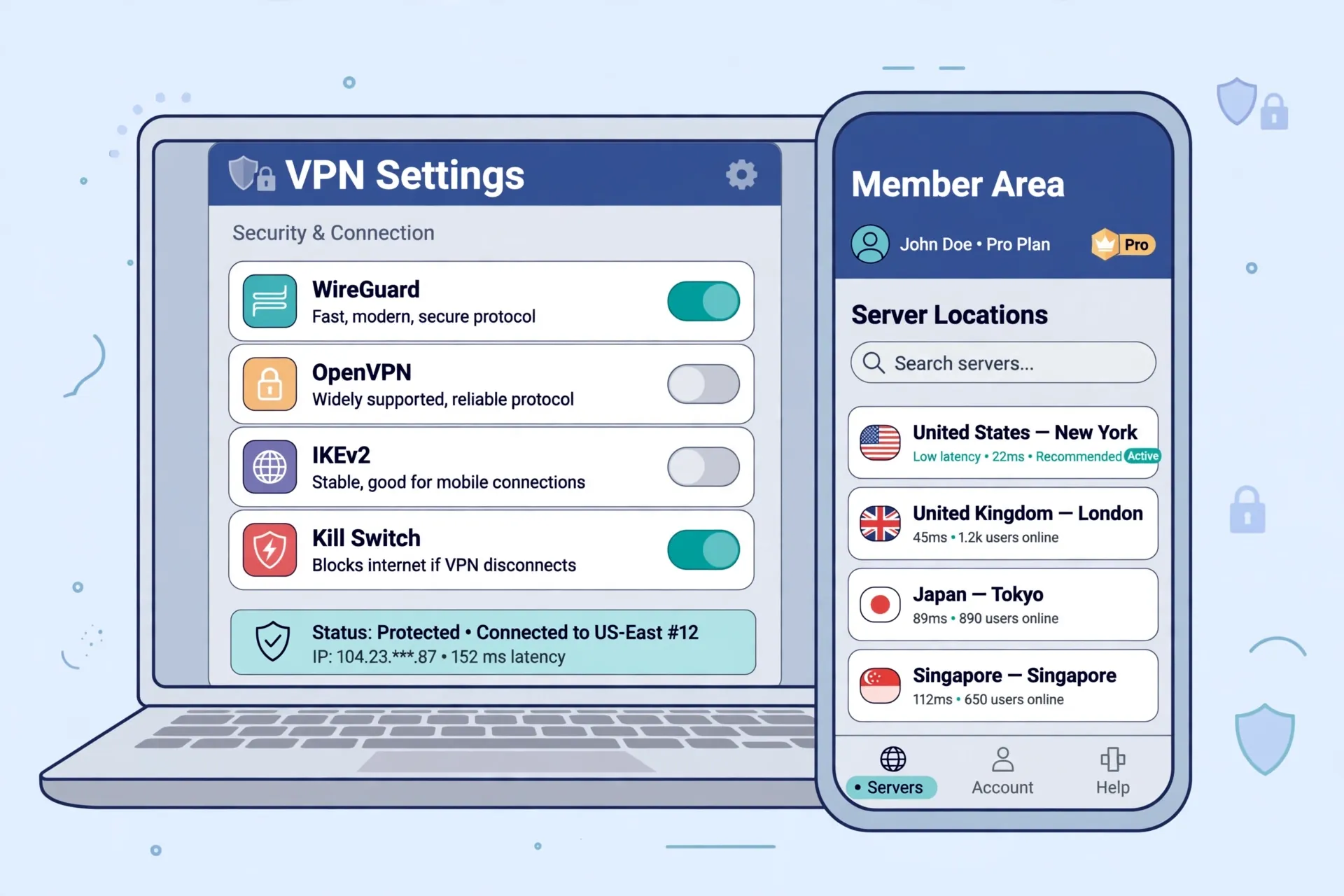
hide.me supports five VPN protocols — WireGuard, OpenVPN, IKEv2, SoftEther, and SSTP — which is more choice than most providers offer, and the right one depends on your network. WireGuard is the fastest option hide.me offers and the best default for most users: it is modern, lightweight, and reconnects quickly when you switch between Wi-Fi and mobile data.
OpenVPN is the reliable fallback. Our guide to OpenVPN explained covers how it works and why it is often the protocol that connects when others fail. It can run over the same port websites use, which makes it harder for a network to block without blocking ordinary browsing too. That is useful in Pakistan, where some networks interfere with VPN connections.
SoftEther deserves a special mention for Windows users. On Windows, SoftEther sends VPN traffic over the same kind of SSL connection websites use, which helps on networks that block VPNs. hide.me’s own help pages note that SoftEther is Windows-only, so phone users cannot use it. If hide.me will not connect on a restricted network on your laptop, switching the protocol to SoftEther is worth trying before anything else.
IKEv2 is the best choice on a phone that switches between Wi-Fi and mobile data, because it reconnects cleanly when the network changes. SSTP is the oldest option and the last resort: use it only if nothing else connects.
The kill switch is the second setting to check, and it should be on before your first real session. When it is on, your device loses internet access if the VPN drops, instead of silently sending your traffic unprotected.
Split tunnelling lets you choose which apps use the VPN and which connect directly. This is useful if a local Pakistani service, such as a banking app, refuses to work through a VPN.
Route that app outside the tunnel and keep everything else protected. Premium adds Multihop, which routes your traffic through two servers instead of one, and port forwarding, which matters mainly for advanced users. Neither is needed for a basic setup.
Surfshark for Pakistan Users: Our Recommendation
hide.me’s free plan is a genuine free option with a choice of server locations, and it is a good way to learn how a VPN works. But for readers in Pakistan who need a VPN every day, Surfshark is our recommended VPN, with 80% off for our users. It covers unlimited devices on one subscription, so your phone, laptop, and family devices are all protected without counting connections.
Surfshark’s advantage on Pakistani networks is its NoBorders mode, which detects when VPN traffic is being blocked and offers servers that tend to connect on restricted networks.
Combined with WireGuard and OpenVPN protocols, a kill switch, and split tunnelling called Bypasser on Windows and Android, it gives you more ways to get connected when a network is difficult. The 7-day free trial on 12- and 24-month plans lets you test it on your own connection before you pay.
That does not make hide.me a bad choice. If your needs are light — occasional browsing on public Wi-Fi, or testing a VPN for the first time — hide.me’s free plan may be all you need, and it costs nothing.
The honest comparison is about speed and distance: hide.me’s free servers are all far from Pakistan and run slower than Premium, while Surfshark offers nearby servers and unlimited devices. Light users can live with hide.me free; heavy users and households will outgrow it quickly.
Surfshark — our recommended VPN for Pakistan
Unlimited devices, NoBorders mode for restricted networks, and 80% off for our users.
For a price comparison with another provider that has a free tier, our guide to Surfshark pricing in Pakistan explains what a paid plan costs and what it includes. The pattern is the same across providers: free plans limit data, devices, or server choice, and the paid plan removes those limits. Read the limits before you choose, and pick the plan that matches how much you actually use.
hide.me Manual Setup: OpenVPN, WireGuard, and IKEv2 Profiles
hide.me is one of the few providers that officially documents manual setup in detail, and this section uses only its own help-centre guides. Manual profiles are for devices the app does not support, or for readers who prefer a third-party VPN client. The app remains the recommended route, and manual setup is the fallback, not the default.
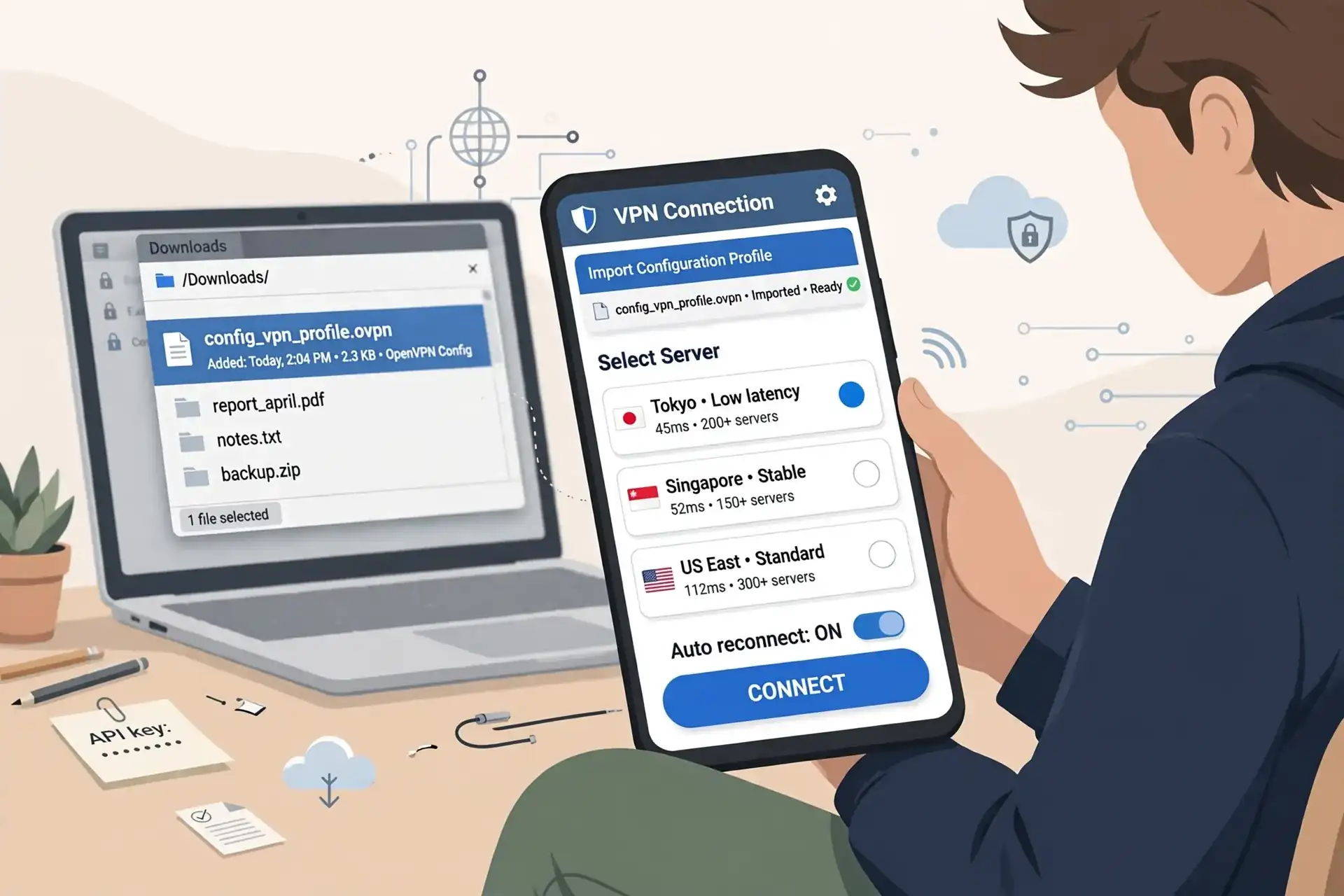
For OpenVPN on Android, hide.me’s official guide is clear. Install OpenVPN for Android by Arne Schwabe from Google Play, then log in to your member area at member.hide.me, open Server Locations, tap the blue plus beside your preferred server, choose Android, and download the .ovpn file.
Import that file into OpenVPN for Android, enter your hide.me VPN username and password, accept Android’s VPN permission request, and connect. Verify the connection by checking that your IP address shows the selected server location.
One important limit: hide.me says that for free users, OpenVPN is only available inside its own VPN client app. To use a third-party OpenVPN client with the service, you need to upgrade to the paid plan, which unlocks the downloadable configuration files. Free users who try the manual OpenVPN route will find the files unavailable, and that is by design rather than a bug.
For WireGuard on Windows, the steps are just as official. Log in to your member area, open the WireGuard menu, click Generate keys, pick a location from the drop-down menu, and click Download WireGuard config file. Import that file into the official WireGuard client and connect. The same file works in any WireGuard-compatible client, which makes it the most flexible manual option hide.me offers.
For IKEv2 on Android, hide.me documents setup through the strongSwan VPN Client app. Install strongSwan from Google Play, add a VPN profile, and enter the server address — for example, netherlands.hide.me — with the VPN type IKEv2 EAP (Username/Password).
In the advanced settings, enter hide.me as the server identity and 443 as the server port, save the profile, and tap it to connect. hide.me’s guide notes that its own client app is the recommended way to connect, and that the strongSwan route exists for cases where the app fails.
How to Verify Your hide.me Connection Is Working
A VPN that says it is connected is not proof that it is working. Verify the tunnel every time you set it up on a new device, and again whenever you change server or protocol. The check takes less than a minute and catches the most common setup failure: an app that looks connected while your real IP address is still exposed.
First, check your IP address before you connect. Search for “what is my IP” and write down the address and location shown. Then connect hide.me, wait for the app to confirm the connection, and search again. The address should be different, and the location should match the server you chose. If nothing changed, the tunnel is not carrying your traffic.
Second, check for DNS leaks. A DNS leak means your device still asks your internet provider’s servers for website addresses even while the VPN is on, which reveals the sites you visit.
Use a DNS leak test site, run it while connected, and confirm the DNS servers shown belong to the VPN, not to your internet provider. Our WireGuard VPN test checklist explains the same verification steps in detail, and they apply to hide.me as well as to WireGuard-based setups.
Third, check the kill switch by disconnecting the VPN while a download or stream is running. With the kill switch on, your traffic should stop immediately.
If the download continues after the VPN drops, the kill switch is off or is not working on your device, and you should fix that before you rely on the VPN for anything sensitive. On Linux, hide.me’s leak protection plays the same role, so test it the same way.
hide.me Not Connecting in Pakistan: Troubleshooting
If hide.me will not connect, work through the causes in order instead of changing everything at once. First, check your internet connection without the VPN. Open a website with the VPN off. If nothing loads, the problem is your connection, not the VPN, and no VPN setting will fix it.
Second, try a different server. Servers get busy or go down for maintenance, and the best server is not always the best at every hour. Pick another location from the list and try again. If one server works and another does not, the problem was that server, and you are done.
Third, change the protocol. In the app’s settings, switch from WireGuard to OpenVPN, IKEv2, or — on Windows — SoftEther. Some Pakistani networks block one protocol and allow another, and this single change fixes more connection failures than any other step. Restart the app after changing the protocol, because the new setting does not always apply to an existing session.
Fourth, check the time and date on your device. VPN encryption depends on certificates, and certificates depend on the clock. A device whose clock is wrong by a large amount can fail to connect with an error that looks like a network problem. Set the clock to automatic and try again.
Fifth, try mobile data. If the VPN connects on mobile data but not on your home Wi-Fi, your home network or internet provider is interfering with the connection. If it fails on both, the problem is more likely the app or the account.
Reinstalling the app is the next step: delete it, download it again from the official source, and sign in fresh. A corrupted install causes failures that look like network problems.
If nothing works, contact hide.me support, which its own guides say is available around the clock, even for free users. Send them the error message, the server you tried, the protocol, and whether the VPN works on mobile data. That evidence lets support help you in one reply instead of five, and it is the same evidence any VPN support team will ask for.
hide.me Limits and Pakistan Considerations
hide.me has real limits, and an honest setup guide should state them. The free plan’s speed is the biggest one. Independent tests in 2026 found hide.me among the slowest free VPNs on both computers and phones, and its own pages say free users do not get unlimited speeds.
Browsing and email work; large downloads and video calls struggle. If speed matters, the free plan is a trial, not a permanent home.
The one-device limit on the free plan is the second limit. If you connect your phone, your laptop is unprotected until you disconnect the phone. Premium’s 10 devices remove this problem, but the free plan forces you to choose. Plan around it: connect the device you are actually using, and disconnect when you switch.
Third, the free server locations are all far from Pakistan — the closest are in Europe — so every free connection travels a long distance, and distance adds latency. For browsing and email you will not notice it. For gaming and video calls you might. Paid users get more than 92 locations, including nearer ones, so the distance problem is mainly a free-plan problem.
Fourth, the free plan blocks torrent transfers and has no streaming servers, and it did not unblock the streaming services tested by independent reviewers in 2026. If streaming or torrenting is your reason for using a VPN, the free plan will disappoint, and Premium is the honest choice. The free plan’s strength is privacy and a choice of server, not entertainment.
On the legal side, VPN use in Pakistan is a subject readers should check for themselves. Pakistan’s telecom regulator, the PTA, has run VPN registration programmes, and the rules have changed over time.
This guide does not give legal advice, and we could not verify the current registration position from an official source at the time of writing. Check the PTA’s current guidance before you rely on any VPN in Pakistan.
Finally, remember that a VPN does not make you anonymous. It encrypts your traffic and changes the IP address websites see, but the services you log in to still know who you are.
hide.me states a no-logs policy that Securitum audited in 2024, which is stronger evidence than a bare promise, but it is still a company claim rather than something you can check yourself. Use a VPN for privacy and security on untrusted networks, not as an invisibility cloak.
hide.me Setup Pakistan: Frequently Asked Questions
Where Should I Download the Official hide.me App?
Download hide.me only from hide.me itself or from your device’s official app store — Google Play for Android, the Apple App Store for iOS, or the store on your Android TV, Fire TV, or Apple TV.
Android users who cannot reach Google Play can use hide.me’s direct APK download from its own Android downloads page. Never install a hide.me APK from a third-party site, because hide.me warns those files have most likely been tampered with.
How Do I Connect to a Server?
Open the hide.me app, choose a location from the server list, and tap the connect button. The app establishes the tunnel and shows your new IP address and the server location. Free users pick from the free locations in Finland, France, Germany, the Netherlands, Switzerland, the UK, and the US. Premium users get the full list of more than 92 locations with over 2,600 servers.
How Can I Check That the Tunnel Is Working?
Check your IP address before and after connecting: search for “what is my IP”, note the address, connect the VPN, and search again. The address and location should have changed to match the server you chose. Also run a DNS leak test while connected to confirm your DNS requests go through the VPN, and test the kill switch by disconnecting mid-download to confirm your traffic stops.
Conclusion: hide.me Setup in Pakistan
hide.me setup in Pakistan is simple when you follow the official route: download the app from hide.me or your device’s app store, install it, and connect — with no account needed at all on the free plan.
The free plan’s choice of 8 locations and no sign-up make it one of the easiest VPNs to try, and the Premium plan adds 10 devices, more than 92 locations, and streaming servers when you need more.
The steps that matter most are the ones people skip: downloading only from official sources, turning on the kill switch, and verifying the tunnel by checking your IP address before and after connecting. Do those three things and your setup is genuinely protecting you, not just showing a green icon.
If the app will not connect on your network, switch protocols — SoftEther on Windows is the trick most guides miss — try another server, and test on mobile data before you conclude the service is at fault. For everyday use in Pakistan, Surfshark remains our recommended VPN, with 80% off for our users — but hide.me’s free plan is a solid, honest place to start.
Surfshark — our recommended VPN for Pakistan
Start with hide.me free, then upgrade to unlimited devices with 80% off for our users.