If Surfshark will not connect in Pakistan, Surfshark is still the VPN we recommend for readers in Pakistan, with 80% off for our users — and this guide will help you fix the connection itself before you consider switching to anything else.
The cause is usually one of four things: a server or protocol your network does not let through, security software blocking the app, an out-of-date app, or IPv6 interfering with the tunnel. None of those means the service is broken, and most of them clear in a few minutes.
This is a diagnostic guide, not a list of guesses. The fixes below follow Surfshark’s own help centre, checked in November 2026, and they are ordered by the error you see and the device you are using. Work through them in order and test the connection after each step, so you know which fix actually worked.
Before you start, be clear about what is failing. Surfshark not connecting can mean the app will not open, the app opens but will not log in, the app logs in but no server connects, or the app connects and then drops immediately. Each of those is a different problem with a different fix, and the first section below helps you tell them apart.
One more thing to check before you begin: make sure you are running the current version of the app. Surfshark releases fixes regularly, and an old version can fail against servers that have moved on. Check for an update in your app store or on Surfshark’s download page before you change any setting.
The Short Answer: Why Surfshark Will Not Connect
Pick a specific country instead of using Quick-connect, then change the protocol in Settings: Automatic first, then WireGuard, then OpenVPN UDP, then OpenVPN TCP. Add Surfshark to your antivirus exclusions list, disable IPv6 on Windows, and update the app to the latest version.
If that does not work, restart the device, reinstall the app, and try a different network. Most connection failures in Pakistan clear at one of these steps, because they are caused by a protocol the local network blocks, by security software in the way, or by an IPv6 conflict on Windows.
If nothing works, send the diagnostic log from the app to Surfshark’s 24/7 support with the server, protocol, error message and time of the failure. Support can only act on a report that lets them reproduce the problem, so the log matters more than a description of the symptom.
The rest of this guide walks through each step in detail, device by device, so you can follow it on the phone or computer in front of you without guessing at menu names.
First, Identify Which Kind of Failure You Have
Connection failures fall into four groups, and the fix depends on the group. The first group is account failures: the app will not log in, shows an authentication error, or reports that the subscription has expired. The second group is app failures: the app will not install, will not open, or crashes on launch.
The third group is tunnel failures: the app logs in and looks healthy, but no server connects, the connection times out, or the app is stuck on Connecting for minutes. The fourth group is network failures: the app connects on one network but not on another, for example on mobile data but not on Wi-Fi, or on home Wi-Fi but not on office Wi-Fi.
Spend a minute sorting your failure into one of these groups before you change any setting. It saves you from applying app fixes to a network problem, or network fixes to an account problem, and it tells you which section of this guide to start with.
Write down the exact error message if the app shows one. Connection failed, authentication error, connection timeout and stuck on Connecting each point to a different cause, and the exact words help support if you need to contact them later.
| Symptom | Likely Cause | Start With |
|---|---|---|
| App will not log in, authentication error | Account or subscription problem | Account and login checks |
| App will not install, open or crashes | App or system problem | Update, reinstall and antivirus checks |
| No server connects, connection times out | Protocol, server or firewall problem | Server and protocol steps |
| Stuck on Connecting for minutes | Protocol blocked or IPv6 conflict | Protocol change and IPv6 step |
| Connects on one network, not another | Network restriction or port block | Camouflage Mode and network checks |
| Connects then drops within seconds | Protocol, battery saver or kill switch | Protocol, battery and reset steps |
Step 1: Check Your Internet and Surfshark Service Status
Before you fix Surfshark, make sure your internet connection itself is working. Disconnect Surfshark completely and try loading a website. If pages are slow or do not load, your internet may be the problem, and no VPN fix will help until the connection itself is stable.
Restart your router and modem: turn them off for 30 seconds, then turn them back on, and test again. On mobile data, toggle airplane mode on for a few seconds and then off, which forces the phone to reconnect to the network with a fresh session.
Next, check whether Surfshark itself is having a service problem. Open Surfshark’s official status page or help centre in your browser and look for a reported outage. A server-side problem affects many users at once, and no setting on your device will fix it. If the service is healthy, move on to the next step.
Also check whether the problem is specific to one server. Try connecting to a different country, ideally one close to Pakistan such as Singapore or the United Arab Emirates, and see whether that connects. If a nearby server works but your usual server does not, the problem is the server, not your device.
If your internet works without the VPN but every Surfshark server fails, the problem is inside the app, the device, or the network path to Surfshark’s servers. That is exactly what the next steps are designed to find.
Step 2: Connect to a Specific Server, Not Quick-Connect
Quick-connect picks a server for you, and it can keep picking the same overloaded or blocked server. Connecting to a specific country instead gives you control, and it is the first fix Surfshark’s own help centre recommends. Open the app, pick a country from the list, and connect to it directly.
If the first country fails, try a second and a third. Servers go down for maintenance and get overloaded, and switching to a different server often fixes the problem immediately. Try a country close to Pakistan first, because a nearby server is also the fastest test of whether the tunnel works at all.
On WireGuard, Surfshark also offers a refresh option that jumps to another server in the same country. Use it when the country’s default server is the problem but you want to stay in the same location, for example because you need a specific country’s IP address.
Avoid connecting to a server in a country where you have no reason to be, just to test. A nearby server gives you the clearest result, because a failure on a nearby server points to your device or network, while a failure only on a distant server can simply be distance and congestion.
Test each server for at least a minute before you give up on it. Some connections take longer than expected on a slow network, and cancelling too early looks like a failure when the connection was still being built.
Step 3: Change the VPN Protocol
A protocol is the technology that decides how your data moves between your device and the VPN server. Surfshark offers Automatic, WireGuard, IKEv2, and OpenVPN in UDP and TCP forms. Switching protocols can fix connection issues when one protocol is blocked by your network.
Start with Automatic, which is the recommended setting and lets the app choose, and in practice it usually picks WireGuard. If Automatic fails, try WireGuard directly, then OpenVPN UDP, then OpenVPN TCP. TCP is slower than UDP, but it uses port 443, the same port as ordinary secure web traffic, so it passes through networks that block other VPN ports.
On mobile, IKEv2 is worth trying as well, because it reconnects quickly when you move between Wi-Fi and mobile data. Change the protocol in the app under Settings, then VPN settings, then Protocol. Test the connection after each change, and do not change two settings at once, or you will not know which one fixed it.
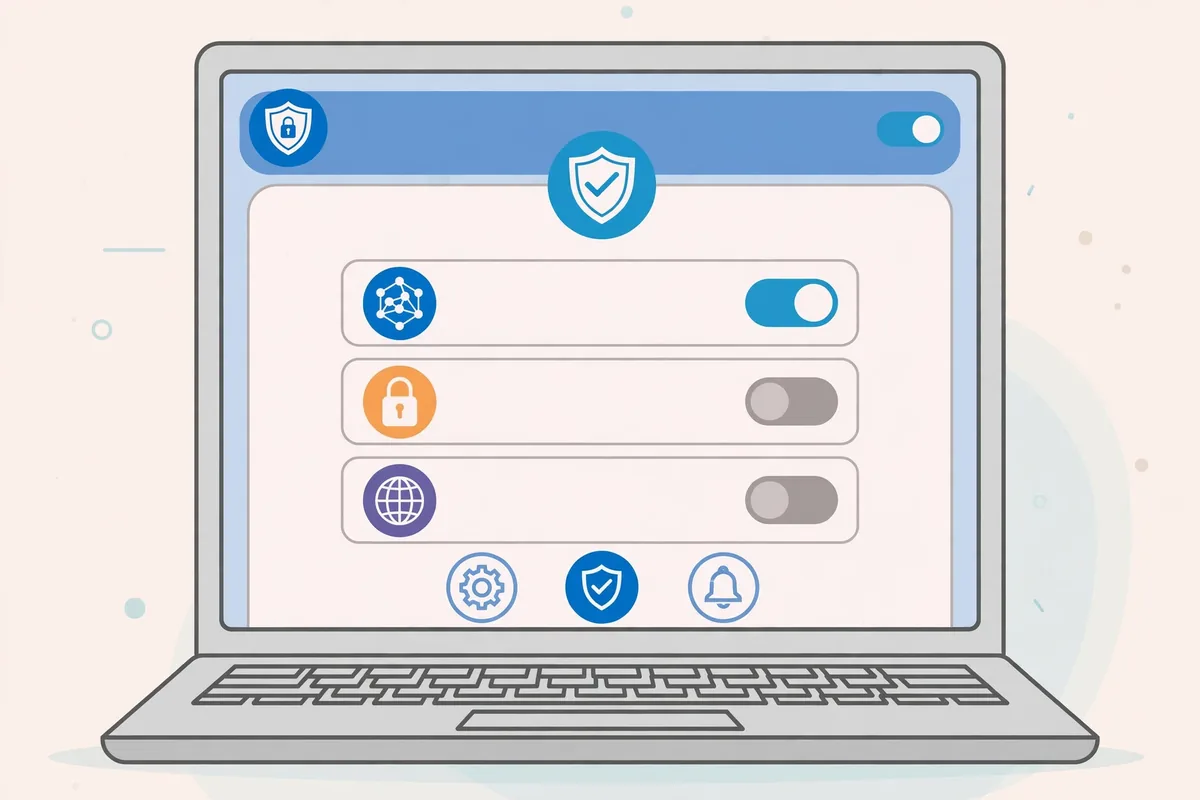
When you select OpenVPN, Surfshark’s Camouflage Mode activates. Camouflage Mode disguises the VPN connection so it looks like ordinary encrypted web traffic, which lets it pass through filters that would block a standard connection. It only works on OpenVPN, so it stays inactive while WireGuard or IKEv2 is selected.
If you are on a restricted network that actively filters VPN traffic, such as some office or university networks, OpenVPN with Camouflage Mode is the combination to try. On a normal home connection in Pakistan it is less likely to be the answer than a simple server or protocol change.
Flagged: Surfshark’s Windows app version and the exact menu layout change between releases, so the Settings path above reflects the app as documented in late 2026. If a menu has moved, use the app’s search or help section to find the protocol setting rather than following an outdated screenshot.
Step 4: Update the App and Check Your Antivirus
An out-of-date app is one of the most common causes of connection failures, because providers change server lists and fix connection bugs in updates. Check for an update in your app store or on Surfshark’s download page, install it, and try connecting again before you change anything else.
If the app is already up to date, reinstall it. A reinstall replaces corrupted files and clears stale configuration that an update alone does not touch. Sign out first, uninstall the app, restart the device, then install a fresh copy and sign in again.
Antivirus software is the next most common cause. Security software can block the VPN app’s network access, quarantine its files, or interfere with the tunnel. Add Surfshark to your antivirus exclusions list. Surfshark publishes step-by-step guides for Norton 360, McAfee, Avast, AVG, Bitdefender, Avira, Kaspersky and Malwarebytes, and in Norton, for example, you exclude the Surfshark program folder from scans.
If you are not sure how to add the exclusion, pause the antivirus briefly and test the connection. If the VPN connects with the antivirus paused, you have found the cause, and you should add the exclusion permanently rather than leaving the antivirus off.
The same applies to firewalls. Windows Firewall and third-party firewalls can block the VPN’s ports. Check your firewall rules and allow the Surfshark app through, and remove any other VPN app from the device, because two VPN apps can fight over the same network adapter and block each other.
Step 5: Disable IPv6 on Windows
Surfshark does not support IPv6 yet, and on Windows an active IPv6 connection can interfere with the tunnel and stop it from connecting at all. This is a Windows-specific fix, and it is one of the first things Surfshark’s own help centre recommends when the app will not connect on a PC.
To disable it, open the network adapter settings in Windows, find your active connection, open its properties, and uncheck the Internet Protocol Version 6 box. Then disconnect and reconnect the VPN and test again. The change is reversible, so you can turn IPv6 back on later if you need it for another service.
This step matters most when the app connects fine on your phone but fails on your Windows computer on the same network. That pattern points to a device-level conflict rather than a network block, and IPv6 is the usual suspect on Windows.
If you are not comfortable changing adapter settings, skip this step for now and come back to it after the other fixes. It is a useful diagnostic, but it is not the only fix, and the protocol and server steps above solve more cases.
On Android and iPhone, IPv6 is handled differently and there is no equivalent toggle in the Surfshark app. If the failure happens on mobile, move on to the battery and network steps below instead.
Step 6: Use NoBorders and Camouflage Mode on Restricted Networks
NoBorders is Surfshark’s feature for restricted networks. When the app detects that it is on a network that blocks VPN traffic, NoBorders shows a short list of servers that tend to connect there. Enable it in the app settings before you connect, and let it narrow the server list for you.
NoBorders and Camouflage Mode work together: NoBorders picks servers likely to connect, while Camouflage Mode keeps the firewall from recognising the connection as a VPN. Both are designed for networks that actively filter VPN traffic, and both are worth enabling when the same app connects fine on one network and fails on another.
If you are on a Pakistani mobile network or a home connection and the VPN will not connect at all, these features are less likely to be the answer than a protocol change or a server change. They are mainly for restricted networks, and it is worth trying them when the failure follows the network rather than the device.
On mobile data, the equivalent test is simpler: switch between Wi-Fi and mobile data and see whether the connection works on one and not the other. A hotel or office network can block VPN connections that mobile data allows, and the reverse also happens. That comparison tells you whether the network is the problem.
Step 7: Restart, Reinstall and Reset the Connection
When the fixes above do not work, a clean restart clears the stuck state that can block a connection. Close the Surfshark app completely, force quit it on mobile so it is not running in the background, restart the device, and try connecting again before you change anything else.
If a restart does not help, reinstall the app as described in Step 4. A fresh install clears cached server lists and configuration files that can go stale, and it is the step that fixes the cases where the app opens and logs in but no server ever connects.
As a last resort on Windows, you can also try a manual WireGuard connection through the official WireGuard app. Surfshark’s support team recommends this as a backup when its own app cannot connect, and it uses the same account and servers through a different client. It does not use Camouflage Mode, so keep it as a second option after the OpenVPN setup.
A reset is a last resort, not a first step, because it deletes settings you will have to recreate. Use it after the server, protocol, antivirus and update fixes have all failed, and test the connection immediately after the restart, before you change anything else.
Fixes by Device: Windows, Android, iPhone and Mac
On Windows, the current app runs on Windows 10 and 11, and the fixes are an app update, a manual country choice, a protocol change, an antivirus exclusion, and disabling IPv6. If the app is slow rather than failing, Surfshark says to expect around 30 percent slowdown on Windows, and switching the protocol to WireGuard and choosing a nearby server are the first remedies.
On Android, the most common cause of random disconnects is battery optimisation. Go to Settings, then Battery, then Battery optimisation, then Surfshark, and choose Don’t optimise. On Samsung phones, also exclude Surfshark from sleeping apps. Then try every protocol in turn, and test on both Wi-Fi and mobile data.
On iPhone, the fixes are an app update, a manual country choice, a full app close and reopen, a protocol change, and a check that no other VPN profile is active in the iOS settings. If another VPN app’s profile is installed, remove it, because iOS allows only one active VPN profile and a stale one can block Surfshark.
On Mac, the current app needs a recent macOS version, so check the minimum version on the Mac App Store listing before you update macOS or the app. The remaining Mac fixes are the same as Windows: update the app, change the protocol, check the antivirus, and reapply the VPN configuration from the app settings.
Flagged: the minimum macOS version for Surfshark’s app and the exact battery-optimisation menu names on Android vary by device and OS version. Check the app’s download page and your phone’s settings directly rather than trusting a version number quoted in a guide, including this one.
Account and Login Problems
If the app will not log in at all, the problem is the account, not the tunnel. Check that your subscription is active and that your payment method has not expired. A lapsed subscription produces an authentication error that looks like a connection failure, and no protocol change will fix it. Check the account status on Surfshark’s website before you spend time on device fixes.
If you see an authentication error, sign out completely and sign in again with the correct email and password. If you signed up through an app store, make sure the subscription is linked to the same account, because a store subscription and a website subscription can sit on different accounts.
Surfshark covers unlimited devices on one subscription, so a device limit is not the cause of a Surfshark connection failure. If you see a message about too many devices, it is more likely an account mix-up, and signing out on devices you no longer use and signing in again usually clears it.
For the full picture of what a Surfshark subscription costs in Pakistan, including the long-term price, see our Surfshark pricing guide for Pakistan. For a full review of the service itself, see our Surfshark review for Pakistan.
The Surfshark Alternative: What You Get When It Works
Surfshark is our recommended VPN for Pakistan, and it is worth fixing rather than abandoning, because the plan that causes the trouble is also one of the cheapest credible options. The long-term Starter plan starts at around $2.19 per month on a two-year deal, with 80% off for our users through the link in this guide.
That price covers unlimited devices on one subscription, more than 100 countries including 12 servers in Seoul, South Korea, and a 30-day money-back guarantee, so you can test the connection from your own network in Pakistan before the subscription becomes final. Surfshark also offers a 7-day free trial on mobile in some regions, which is another way to test it.
Surfshark has no free plan, so a free tier is not an alternative when the paid app will not connect. The honest options are to fix the app with this guide, or to test a second provider during its own trial or guarantee period and compare the two on the same network.
Surfshark’s Smart DNS feature ended on 2 February 2026, so it is no longer available as a fallback for devices that cannot run the app. If you were relying on Smart DNS on a smart TV or console, the app or a router setup is now the route to take.
Surfshark — our recommended VPN for Pakistan
One subscription covers every device in your home, and the same account works on Windows, Android, iPhone and macOS.
What to Send Surfshark Support
If you need to contact Surfshark support, the quality of your report decides how fast you get a useful answer. Send the diagnostic log from the app’s Help or Settings section, and include the server you tried, the protocol you used, the exact error message, the time the failure happened, and your app version and device details.
Include the steps you already tried, in order, so support does not ask you to repeat them. List the servers you tried, the protocols you tried, whether the antivirus was on or off, and whether the failure happens on Wi-Fi, mobile data, or both. A report that lets support reproduce the failure gets a faster answer than a report that only describes the symptom.
Surfshark offers 24/7 support by live chat and email. Start with live chat for a connection failure, because the agent can walk you through the diagnostics in real time, and have the diagnostic log ready before you open the chat.
Limitations and the Pakistan Context
Some connection failures in Pakistan have no fix on your device, because they come from the network itself. The PTA has restricted unregistered VPN use at times, and local rules on VPN registration have changed before. Keep your provider’s app updated, follow current PTA guidance, and do not assume that a connection failure is always a problem with the app.
A VPN connection is also not guaranteed on every network. Some public and workplace networks block VPN traffic deliberately, and some mobile networks throttle it. If Surfshark connects on your home Wi-Fi but not on your office network, the office network is the cause, and Camouflage Mode or a different protocol are the only fixes available to you.
Finally, do not trust a fix you have not tested. A guide that tells you to change a setting is only useful if you test the connection after the change and confirm it works. Work through the steps in order, test after each one, and keep a note of which step fixed the problem, so you can repeat it if the failure comes back.
If the failure returns regularly at the same time of day, note the pattern and include it in your support report. A failure that follows a schedule points to network congestion or a filtering rule, and that detail helps support more than a single failed attempt.
Surfshark — our recommended VPN for Pakistan
If Surfshark still will not connect after every fix in this guide, test it again during its 30-day money-back guarantee window.
Our Verdict: Can You Fix Surfshark Not Connecting in Pakistan?
Most Surfshark connection failures in Pakistan clear at one of the early steps in this guide: a specific server instead of Quick-connect, a protocol change, an antivirus exclusion, disabling IPv6 on Windows, or an app update. Those five fixes solve the large majority of cases, and they take about ten minutes to work through.
If the early steps fail, the reinstall and the manual WireGuard fallback clear the stale settings that block the remaining cases, and NoBorders with Camouflage Mode covers the restricted networks. Only a small number of failures need support, and for those, the diagnostic log is the fastest route to an answer.
If Surfshark still will not connect after every step, test a second provider before you conclude the problem is your connection. A provider that connects reliably from your network, on your devices, is worth more than a provider with a longer feature list that will not connect at all.
Frequently Asked Questions
Why Is Surfshark Not Connecting in Pakistan?
The usual causes are a server or protocol your network does not let through, security software blocking the app, an out-of-date app, IPv6 interference, or a network restriction. Work through the fixes in order: pick a specific server, change the protocol, check your antivirus, disable IPv6, update the app, then restart the device.
Is the Problem My Account, Network or VPN App?
Test it in three steps. If the app will not log in, the problem is the account. If the app logs in but no server connects on any network, the problem is the app or the device. If it connects on mobile data but not on Wi-Fi, the problem is the network. Each answer points to a different fix in this guide.
What Logs Should I Send to Support?
Send the diagnostic log from the app’s Help or Settings section, plus the server you tried, the protocol you used, the exact error message, the time the failure happened, and your app version and device details. Surfshark support can only act on a report that lets them reproduce the failure.